%20(1).svg)


.png)


.png)

.png)


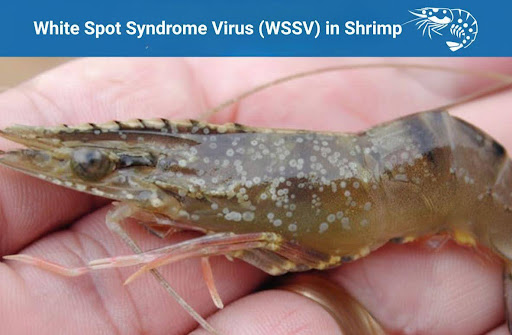
White spot syndrome virus, or WSSV in shrimp is a viral disease that continues to be reported across shrimp-producing regions and remains a concern for aquaculture health management. With the steady growth of global aquaculture and increased focus on shrimp cultivation, disease control has become an important aspect of farm productivity.
Among the diseases affecting shrimp, white spot syndrome virus (WSSV) is commonly observed due to its transmissibility and impact on production outcomes, highlighting the need for consistent biosecurity and health monitoring practices in shrimp farming systems.
Clinical Signs of white spot syndrome virus (WSSV) in shrimp
WSSV in shrimp is caused by a virus belonging to the Nimaviridae family and the Whispovirus genus. WSSV symptoms include white, circular spots on the carapace, which may be accompanied by generalised redness.
The hepatopancreas often becomes enlarged and takes on a pale yellow-to-whitish appearance. Infected shrimp typically exhibit reduced feed intake, and in the later stages may display abnormal swimming behaviour, such as moving near the water surface or along pond edges.
Other WSSV symptoms include:
Symptoms of white spot syndrome virus include loss of appetite, leading to an empty stomach and gut, along with lethargy, reduced activity, and a weakened escape reflex.
Physical changes are visible, such as expanded chromatophores, reddening of the uropods, and softening of the exoskeleton or, in some cases, the abdominal muscle.
During the premoult stage, the cuticle may detach easily, and the hepatopancreas may appear enlarged or abnormal.
WSSV in shrimp is confirmed primarily through PCR testing (conventional or real-time PCR) of tissues such as gills, pleopods, or hepatopancreas, as clinical signs alone are not sufficient for diagnosis.
What causes WSSV infection in shrimp?
Shrimp are invertebrates that are highly sensitive to changes in their aquatic environment and are exposed to multiple stressors, including sudden fluctuations in temperature and salinity, heavy metal contamination, and exposure to pathogenic microorganisms such as viruses.
Because shrimp rely solely on cell-mediated immunity (CMI) and lack adaptive immune responses and immunoglobulin production, their ability to respond to viral challenges is limited. Under culture conditions, these environmental and physiological stress factors can compromise immune function and increase susceptibility to viral infections.
Among the many viruses affecting shrimp aquaculture, white spot syndrome virus (WSSV) is frequently associated with disease outbreaks, particularly when biosecurity and management practices are inadequate.
WSSV may cause up to 100% mortality within 3-10days.
An acute infection can kill shrimp within 2–10 days after symptoms appear. Shrimp may start dying 1–2 days after infection, and mass deaths usually happen between day 3 and day 10, with 100% of the shrimp dying.
White spot syndrome virus cannot be treated with antibiotics since it is banned. Since there are no antibodies in shrimp, they cannot be vaccinated.
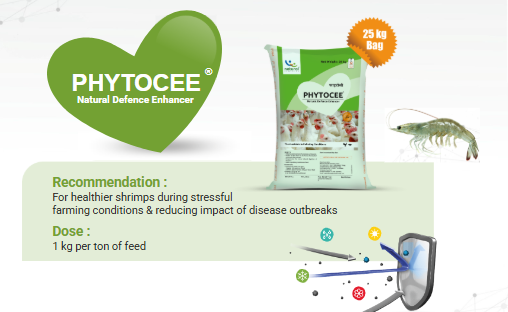
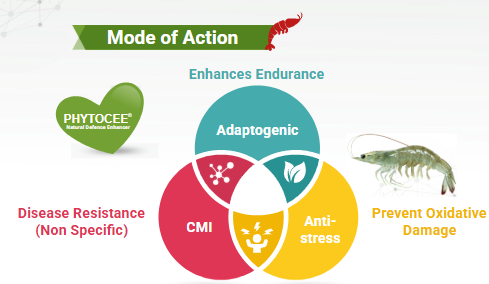
Phytocee™, a natural defense enhancer, boosts immunity in shrimp and thereby combats white spot syndrome virus in shrimp.
Role of Phytocee in WSSV Condition in shrimp
Phytocee is a natural phytogenic solution containing polyphenols, withanolides, and triterpenoids. These bioactive compounds improve stress endurance and disease resistance, and help reduce oxidative damage in shrimp, which in turn helps shrimp combat the stress caused by immune suppression in white spot syndrome virus.
A controlled study was carried out to evaluate how Phytocee supports Litopenaeus vannamei shrimp under White Spot Syndrome Virus (WSSV) challenge. In the study, Phytocee was added to the feed of shrimp that had already been exposed to WSSV.

Shrimp that received Phytocee showed lower mortality and survived for a longer period after infection compared to those that did not receive Phytocee. These observations suggest that Phytocee helped shrimp manage disease-related stress more effectively, improving their ability to withstand the viral challenge. The trial also showed that results varied with dosage, underlining the importance of proper and timely application at the farm level.
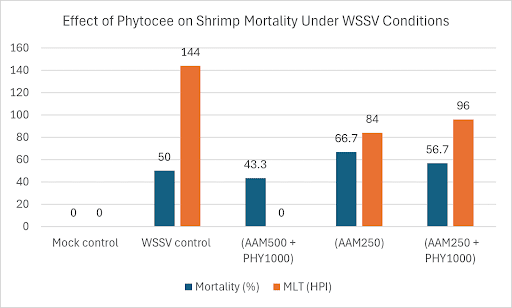
Note: AAM, Ascorbic acid monophosphate; PHY, Phytocee™; MLT, Median lethal time; WSSV, White spot syndrome virus; hpi, hours post-inoculation
Hence, the inclusion of Phytocee reduced mortality and extended survival time in shrimp affected with white spot syndrome virus.
Preventive Measures for WSSV in Shrimp
There is no cure for WSSV in shrimp. Hence, to ensure shrimp remains healthy, here are a few preventive measures every aqua farmer should take:
- WSSV can stay in wet soil. Remove black soil, dry the pond completely, and apply lime. Leave the pond empty for 3–4 weeks between culture cycles to let the soil dry fully.
- Avoid wild shrimp, crabs, mysids, copepods, and other crustaceans in the farm.
- Treat every drop of incoming water with 30 ppm calcium hypochlorite.
- Stock ponds only with post-larvae that are tested using a WSSV test kit and confirmed free of WSSV.
- Implement strong biosecurity measures such as reservoir ponds, bird and crab fencing, and thorough cleaning of staff, tools, and machines.
- Maintain good water quality, correct feeding, and regular health monitoring.
- Avoid low water depth, overcrowding, poor water quality, high temperatures, and increased salinity, which raises stress levels in shrimps.
- During culture, use the shrimp WSSV test kits. Send samples (live or dying shrimp preserved in ethyl alcohol) to a lab.
Phytocee with its adaptogenic properties enhances endurance and immune response, shrimps and consequently provides better resistance and protection against white spot syndrome virus in shrimp. Therefore, Phytocee can be safely recommended for use in shrimps to improve disease resistance and survivability.
*Dosage may vary by region and shrimp species.