%20(1).svg)


.png)


.png)

.png)


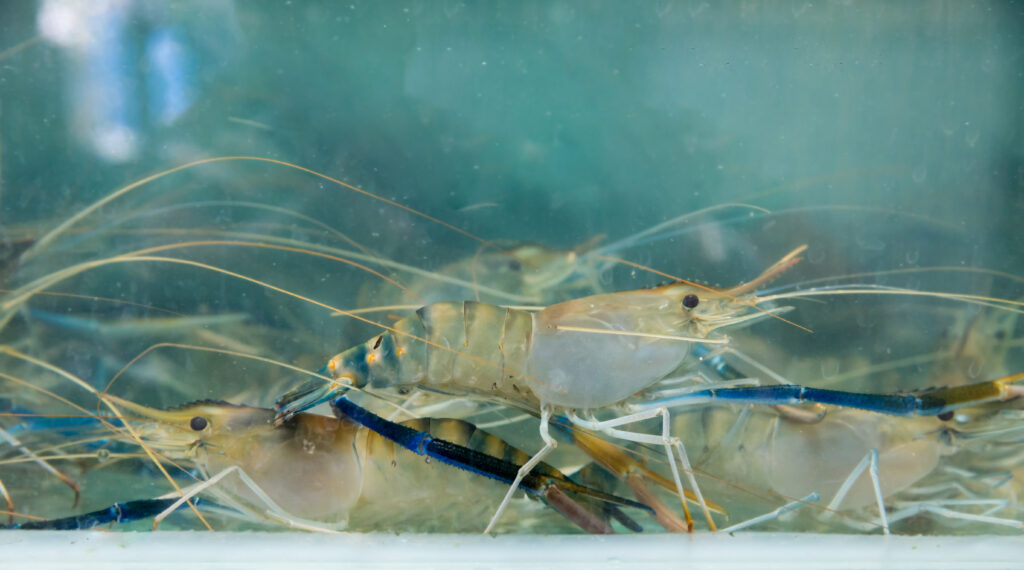
Shrimp aquaculture has become one of the fastest-growing sectors of global seafood production. However, disease outbreaks remain one of the most serious challenges affecting productivity and profitability. Among the bacterial diseases affecting shrimp farms, vibriosis in shrimp is considered one of the most widespread and economically threatening conditions.
Vibrio infections can rapidly spread in aquaculture systems, leading to reduced growth, poor feed efficiency, and significant mortality. Because shrimp farming operates under intensive production conditions, disease outbreaks can escalate quickly if not managed properly.
Understanding vibriosis in shrimp aquaculture, its symptoms, causes, and sustainable prevention strategies is essential for maintaining farm productivity and ensuring long-term profitability.
What is Vibriosis in Shrimp?
Vibriosis in shrimp is a bacterial disease caused by several species belonging to the Vibrio genus. These bacteria naturally occur in marine and brackish water environments and can become opportunistic pathogens under stressful conditions.
Some of the commonly reported pathogenic species affecting shrimp include:
- Vibrio parahaemolyticus
- Vibrio harveyi
- Vibrio alginolyticus
- Vibrio vulnificus
These pathogens can infect different shrimp species, especially when they are exposed to environmental stress, poor water quality, or nutritional imbalances.
In shrimp farms, Vibrio bacteria often exist as part of the normal microbial community. However, when environmental conditions deteriorate or the immune status of shrimp weakens, these bacteria can multiply rapidly and trigger disease outbreaks.
Why Vibriosis is a Major Concern in Shrimp Aquaculture
In vibriosis in shrimp aquaculture, disease outbreaks can lead to severe production losses due to:
- Increased mortality rates
- Reduced growth performance
- Poor feed conversion efficiency
- Higher management costs
- Lower harvest yields
Shrimp exposed to Vibrio pathogens often show compromised immune responses and increased susceptibility to secondary infections. As a result, even moderate infections can escalate into large-scale farm losses.
Environmental stressors play a significant role in disease outbreaks. Factors include:
- Poor water quality
- High stocking densities
- Sudden salinity fluctuations
- Temperature stress
- Accumulation of organic matter
Vibriosis Symptoms in Shrimp
Early identification of vibriosis symptoms in shrimp is essential for timely intervention. The disease can present both external and internal signs depending on the severity of infection.
External Symptoms
Shrimp affected by vibriosis may show several visible signs, including:
- Red discoloration of the body or appendages
- Necrosis of the tail or walking legs
- Shell lesions or melanized spots
- Soft shells
- Reduced activity and sluggish swimming
Shrimp may also gather near pond edges or water inlets due to stress or impaired physiological function.
Internal Symptoms
Internally, infected shrimp may exhibit:
- Hepatopancreatic damage
- Empty gut or reduced feed intake
- Tissue necrosis
- Muscle opacity
In advanced cases, septicemia may occur, leading to rapid mortality within a short period.
Why Antibiotics Are Not a Sustainable Option
The use in shrimp aquaculture has become increasingly restricted worldwide.
Many countries and international seafood regulations now ban the use of antibiotics in shrimp farming because of concerns related to:
- Antibiotic residues in seafood
- Development of antimicrobial resistance (AMR)
- Environmental contamination
- Trade restrictions and export rejections
The misuse of antibiotics not only threatens consumer safety but also contributes to the global public health challenge of antimicrobial resistance.
Why Vaccination Is Not Possible in Shrimp
Vaccination has been widely adopted in terrestrial livestock and some fish species. However, vaccination is not feasible in shrimp aquaculture for several biological reasons.
Shrimp belong to the invertebrate group and possess an innate immune system rather than an adaptive immune system. Unlike vertebrates, shrimp do not develop long-term immunological memory after exposure to pathogens.
Additionally, practical challenges limit the application of vaccines in shrimp farming:
- Shrimp are too small for individual injection
- Large farm populations make vaccination impractical
- Oral vaccine delivery remains ineffective in many cases
Because of these limitations, shrimp health management must focus on strengthening innate immunity and improving resilience against pathogens.
Role of Phytogenic Solutions in Preventing Vibriosis
Phytogenic feed additives are plant-derived bioactive compounds that support animal health and resilience. In shrimp production, phytogenic supplements are increasingly used as part of preventive health programs.
These natural compounds can help:
- Support immune function
- Improve stress tolerance
- Enhance antioxidant defense mechanisms
- Improve overall survivability during pathogen exposure
.
How Phytocee Supports Survivability in Vibrio-Challenged Shrimp
One phytogenic solution that has demonstrated promising results in shrimp health management is Phytocee, a plant-based nutritional supplement designed to support immune function and stress resilience.
A controlled evaluation conducted on Litopenaeus vannamei shrimp challenged with Vibrio parahaemolyticus assessed the impact of Phytocee supplementation on survivability.
Study Overview
Shrimp were divided into multiple groups receiving different combinations of Vitamin C and Phytocee. All groups were experimentally challenged with Vibrio parahaemolyticus to simulate disease pressure.
The trial lasted eight weeks, and survivability was evaluated using cumulative survival percentage.
Key Findings
The study showed that shrimp receiving Phytocee as a top-up at 2 kg/ton along with Vitamin C at 1 kg/ton demonstrated significantly improved survival rates compared to other treatment groups.
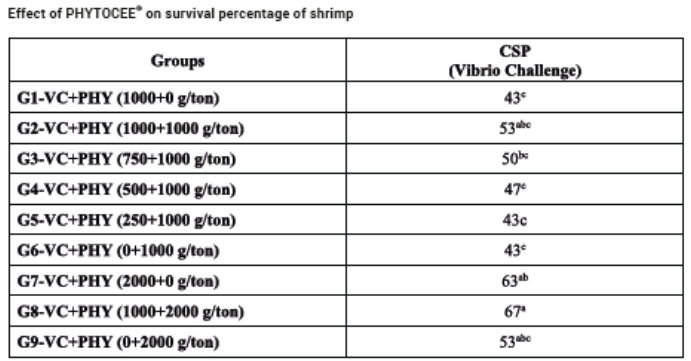
VC, Vitamin C; PHY, PHYTOCEE ; CSP, Cumulative survival percentage (7 days observation) Different letters in the same column differ significantly, p<0.05 based on least significant difference (LSD)
These results indicate that Phytocee supplementation can help strengthen shrimp resilience under Vibrio challenge conditions, improving survivability during disease outbreaks.
By supporting antioxidant capacity and physiological stability, phytogenic supplementation helps shrimp better cope with stress and bacterial exposure.
Summary
Vibriosis in shrimp remains one of the most persistent disease challenges in modern aquaculture. The condition can cause significant economic losses through reduced growth, poor feed utilization, and increased mortality.
Early detection of vibriosis symptoms in shrimp, combined with strong farm management practices, is essential for minimizing disease risks.
Because antibiotics are banned in shrimp farming and vaccination is not feasible, the industry must rely on preventive strategies that strengthen shrimp health and resilience.
Phytogenic nutritional solutions provide a sustainable approach to disease prevention.