%20(1).svg)


.png)


.png)

.png)


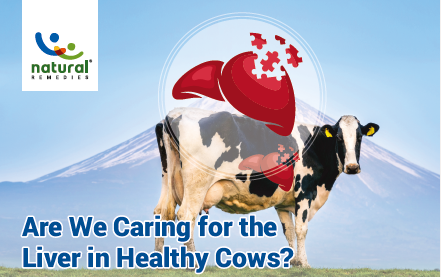
The liver is the largest gland, the largest solid organ, and one of the most vital organs that functions as a center for the metabolism of nutrients and excretion of waste metabolites. Its primary function is to control the flow and safety of substances absorbed from the digestive
system before the distribution of these substances to the systemic circulatory system. A total loss of liver function could lead to death within minutes, demonstrating the liver’s great importance. In herbivores, the liver weighs 1 to 1.5% of their body weight. The liver is much heavier in young animals than in older animals as it atrophies with age.
The basic functional unit of the liver is the liver lobule. A single lobule is about the size of a sesame seed and is roughly hexagonal in shape. The primary structures found in a liver lobule include:
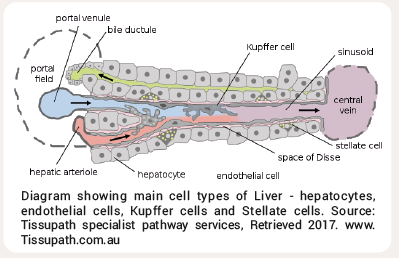
- Plates of hepatocytes which form the bulk of the lobule
- Portal triads at each corner of the hexagon
- Central vein
- Liver sinusoids that run from the central vein to the portal triads
- Hepatic macrophages (Kupffer cells)
- Bile canaliculi (little canals) – formed between walls of adjacent hepatocytes
- Space of Disse – a small space between the sinusoids and the hepatocytes
Functions of the Liver:
The liver has more than 500 different functions. The major functions of the liver are:
Bile Secretion:
The liver secretes bile an alkaline, bittertasting, yellowish-green fluid that contains bile salts
(conjugated bile acids), cholesterol, bilirubin (a pigment), electrolytes, and water. It is formed by hepatocytes and secreted into the canaliculi. Bile helps with digestion by breaking down fats into fatty acids.
Bilirubin Metabolism:
Old or damaged RBCs are removed from the circulation by macrophages in the spleen and liver. Bilirubin is a byproduct of the destruction of aged red blood cells. It gives bile a greenish-black color and produces the yellow tinge of jaundice. Bilirubin is metabolised in the liver and excreted in the urine, and a small amount is eliminated in feaces.
Vascular and Hematologic Functions:
The liver is an important blood reservoir, due to an extensive vascular network, the liver can store a large volume of blood and can also release blood to maintain systemic circulatory volume in the event of hemorrhage. Kupffer cells in the sinusoids of the liver remove bacteria and foreign particles from the portal blood. It synthesises prothrombin, fibrinogen, and clotting factors. Vitamin K, a fat-soluble vitamin, is essential for the synthesis of other clotting factors.
Nutrient Metabolism:
Fats – The fatty acid oxidation, synthesis of cholesterol/lipoproteins, and production of ketoacids take place in liver.
Protein – The plasma proteins, including albumins and globulins (excluding gammaglobulin), are synthesized by the liver. The liver also synthesizes several non essential amino acids and
serum enzymes, including aspartate aminotransferase, alanine aminotransferase, lactate dehydrogenase and alkaline phosphatase.
Carbohydrate – The liver contributes to the stability of blood glucose levels by
releasing glucose during states of hypoglycemia (low blood sugar) and taking up glucose during states of hyperglycemia (high blood sugar) and storing it as glycogen (glyconeogenesis) or converting it to fat. When all glycogen stores have been used, the liver can convert amino acids and glycerol to glucose.
Metabolic Detoxification:
The liver alters exogenous and endogenous chemicals (e.g. drugs), foreign molecules,
and hormones to make them less toxic or less biologically active and diminishes intestinal or renal tubular reabsorption of potentially toxic substances and facilitates their intestinal and renal excretion.
Storage of Minerals and Vitamins:
The liver stores certain vitamins and minerals, including iron and copper, in durations of excessive intake and releases them in durations of need. The liver can store vitamins B12 and D for several months and vitamin A for several years. The liver also stores vitamins E and K. Iron is stored in the liver as ferritin, an iron protein complex and is released as needed for red blood cell production.
Endocrine Functions:
The liver helps in:
a) Activation of vitamin D
b) Conversion of thyroxine (T4) to T3
c) Secretion of angiotensinogen
d) Metabolising hormones
The Immunologic Function:
The liver is particularly rich in cells of the innate immune system. The main cell types here are kupffer cells and NK T cells. NK T cells are not strictly part of innate immunity but functionally somewhere in between adaptive and innate. Adaptive immunity can be classified into humoral immunity and cell-mediated immunity, mediated principally by B and T lymphocytes.
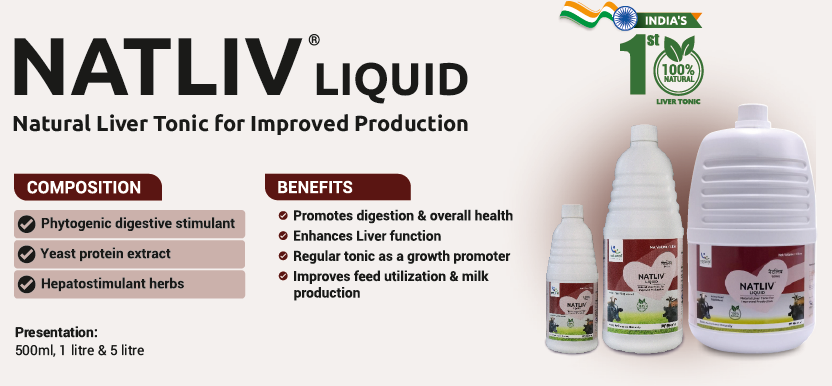
Hence maintaining liver health in cattle is essential for optimizing production efficiency, ensuring animal welfare, and minimizing the risk of disease and economic losses in livestock operations. An every day use of Natliv, a 100% natural liver tonic one of its kind helps to function liver optimally and ensures a healthy liver in animals.