%20(1).svg)


.png)


.png)

.png)


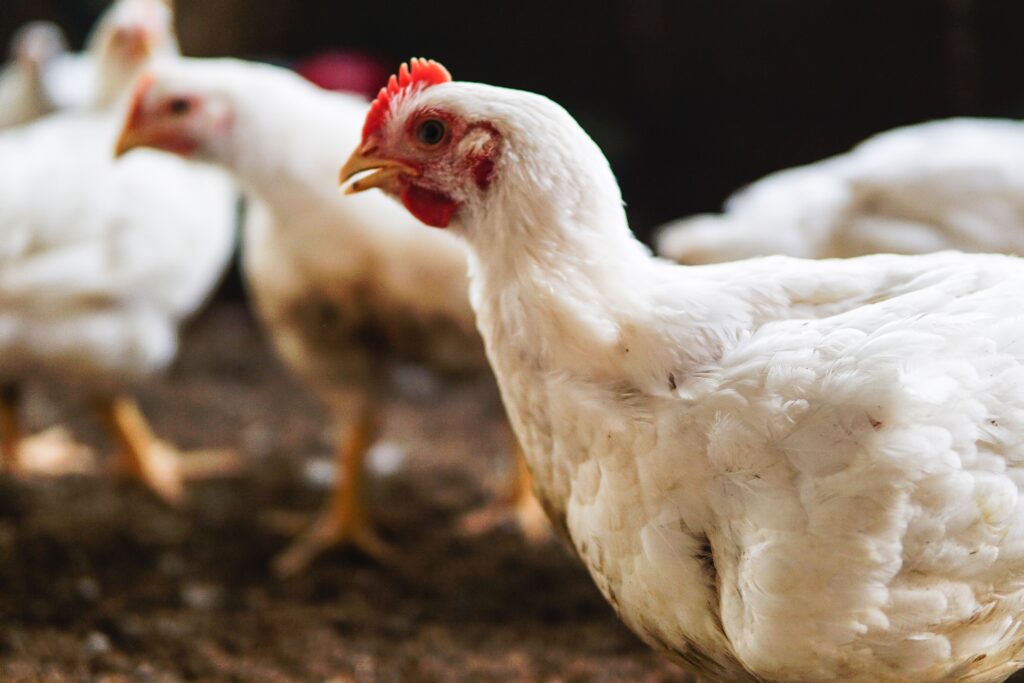
In poultry farming, two critical environmental factors that significantly influence bird health and performance are litter ammonia and relative humidity. Ammonia is released when uric acid in poultry droppings decomposes, and elevated levels can damage the respiratory system, eyes, and footpads, eventually reducing productivity and increasing mortality. Relative humidity represents the amount of moisture in the air, and maintaining appropriate humidity levels is essential to control pathogen growth and minimize infection risks.
Poultry excreta contains undigested protein and uric acid. When microbial enzymes act on this material, they convert it into ammonia (NH₃). Several litter conditions—such as pH, moisture content, oxygen availability, temperature, and nutrient sources—affect this conversion rate. Ammonia concentration in a poultry house should be kept below 10 ppm, although levels up to 25 ppm may still be tolerated without major harm. Ideally, relative humidity should be maintained at 50–70%. Factors such as the rainy season, malfunctioning foggers, inadequate ventilation, and water leaks commonly increase humidity inside the shed.
Ammonia levels and humidity are closely linked. High humidity amplifies the harmful effects of elevated ammonia in poultry. Moist air dissolves more ammonia, making it easier for birds to inhale the gas during respiration, which leads to increased ammonia absorption into the bloodstream. When ammonia interacts with moisture, it forms ammonium, a corrosive compound that can cause additional tissue damage. High humidity also slows litter drying, allowing it to retain more ammonia.
Adverse Impacts on Poultry
Respiratory Problems
High ammonia levels irritate the respiratory tract. Ammonia damages the mucosal lining of the trachea, causing cilia paralysis, loss of epithelial cells (deciliation), and necrosis of the mucosal tissue.
Foot Lesions
Continuous exposure to ammonia in wet litter leads to chemical burns on the footpads. This results in painful footpad dermatitis, affecting bird comfort and mobility.
Eye Lesions
Prolonged exposure to high ammonia levels causes eye irritation. Birds may show conjunctivitis, corneal damage, swollen or reddened eyelids, irritation of the conjunctiva and nictitating membrane, and partial or complete eye closure.
Reduced Performance
High ammonia and humidity levels contribute to poor growth, reduced feed efficiency, increased stress, and higher mortality.
Prevention
Along with good farm management practices—such as maintaining proper ventilation, correct stocking density, temperature control, effective litter management, and sound dietary practices—nutritional interventions can play an additional role. Phytogenic Feed Additives (PFAs) can be included in poultry diets to:
Managing ammonia and humidity is vital for maintaining poultry health and productivity. Along with good farm practices, STODI provides targeted nutritional support to strengthen birds’ resilience. This standardized botanical powder enhances gut integrity, normalizes peristalsis, reduces inflammation, boosts gut immunity, and controls hypersecretion—thereby reducing wet droppings.
Its synergistic phytoconstituents, including Andrographolide, Punicalagins, Ellagitannins, and Polyphenols, have been proven through metagenomics and GALT studies to improve microbiota and gut immunity. By minimizing wet litter, STODI decreases ammonia generation and fly load, supporting better welfare, cleaner environments, and more consistent growth performance.